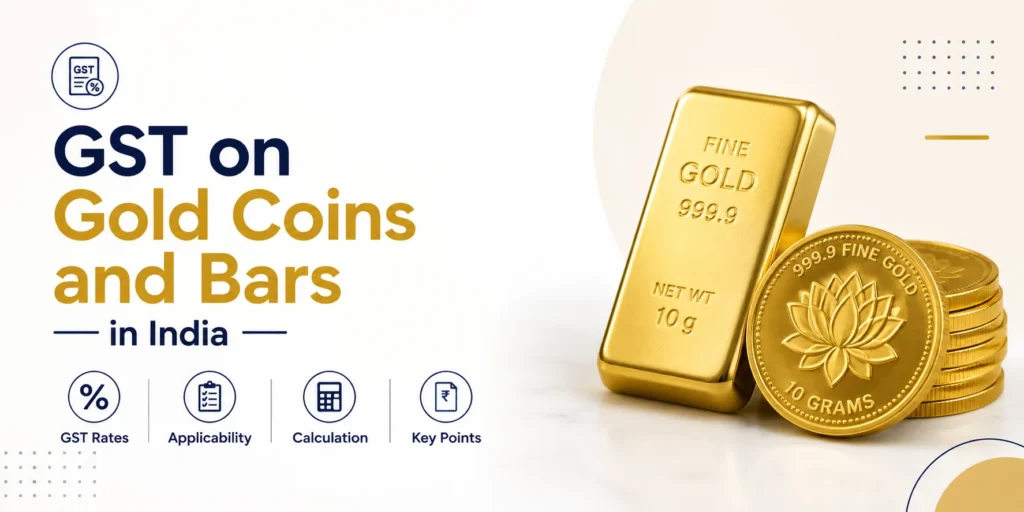
GST on gold coins and bars is a flat 3% on the value, with no separate making-charges layer to account for. That’s the single biggest thing that sets coins and bars apart from jewellery tax-wise: what you see is what you pay tax on, nothing else added.
Page Contents
Why Coins and Bars Are Simpler Tax-Wise Than Jewellery
Jewellery has two tax components (3% on gold, 5% on making charges) because it involves labour and craftsmanship. Coins and bars are minted, not crafted, so there’s no design or artisan work to tax separately. The only addition to the base gold value is typically a small minting or packaging premium the seller builds into the price, and since that premium is part of the sale price, the same 3% simply applies to the full amount charged, not as a separate line.
This is also why coins and bars are usually the more tax-efficient way to hold gold if your goal is pure investment rather than something wearable: you’re not paying an extra 5% on craftsmanship you don’t need.
GST HSN Classification for Coins vs Bars vs Jewellery
Gold’s HSN classification actually splits into three distinct codes depending on form, which matters for accurate invoicing:
| Form | HSN Code | GST Rate |
|---|---|---|
| Gold coins | 7118 | 3% |
| Gold bars, ingots, biscuits | 7108 | 3% |
| Gold jewellery | 7113 | 3% |
All three land at the same 3% rate, but coins specifically fall under the dedicated “Coin” heading (7118), separate from raw or semi-manufactured gold forms like bars and biscuits (7108). This distinction mostly matters for businesses filing returns, but it’s also a good sanity check on your invoice: if you’re buying a coin and the HSN code shown is something other than 7118, it’s worth asking why.
GST Cost at Common Coin Weights
Since there’s no making-charge variable to complicate things, coin pricing is simple arithmetic: gold value × weight, plus 3%. Here’s what that looks like at an illustrative gold rate of ₹14,000/gram (check the live rate on the day you buy):
| Coin Weight | Gold Value | GST (3%) | Total |
|---|---|---|---|
| 1 gram | ₹14,000 | ₹420 | ₹14,420 |
| 2 grams | ₹28,000 | ₹840 | ₹28,840 |
| 5 grams | ₹70,000 | ₹2,100 | ₹72,100 |
| 8 grams | ₹1,12,000 | ₹3,360 | ₹1,15,360 |
| 10 grams | ₹1,40,000 | ₹4,200 | ₹1,44,200 |
Small coins (1-2 grams) stay popular as festival and gifting purchases specifically because the tax scales cleanly with value; there’s never a jump to a higher slab regardless of weight.
Bank vs Jeweller vs Government Mint: Where to Buy
GST is identical wherever you buy (3%, no exceptions), so the rate itself isn’t a reason to prefer one seller over another. What actually differs is the premium charged over the day’s gold rate, and more importantly, what happens when you want to sell the coin back:
- Banks: Typically charge a higher premium over the metal rate, but critically, most banks do not buy back gold coins they’ve sold you. This is worth knowing before you buy, since it affects your exit options.
- Jewellers: Usually offer buyback or exchange, making them more liquid for resale, though the price offered often factors in a deduction versus pure market rate.
- Government mints and bullion dealers (like MMTC-PAMP): Tend to have competitive premiums and are a common choice for larger, investment-grade purchases, with liquidity depending on the specific dealer’s buyback policy.
If you’re buying purely for long-term holding and don’t anticipate needing to sell soon, the premium matters more than buyback terms. If you might need liquidity, checking a seller’s buyback policy before you buy is worth the extra five minutes.
Coin vs Jewellery: A Quick Comparison for Investment Purposes
| Aspect | Gold Coin/Bar | Gold Jewellery |
|---|---|---|
| Typical purity | Higher (often 24K, 999) | Lower (22K/18K, alloyed for strength) |
| Making charges | Minimal (1-2% minting premium) | High (5-25% depending on design) |
| GST impact | 3% only | 3% + 5% on making charges |
| Resale value | Close to market rate | Reduced by making-charge deductions |
| Best suited for | Pure investment | Investment + personal/wearable use |
If your primary goal is holding gold as an asset rather than wearing it, coins and bars come out ahead purely on the tax and cost-efficiency front. Jewellery makes more sense when you want both the asset and something to actually wear.
Purity Standards for Gold Coins
Investment-grade gold coins are typically sold at much higher purity than jewellery, commonly:
- 999 purity (24K): Essentially pure gold, the standard for most investment coins and bars
- 916 purity (22K): Less common for coins specifically, more typical of jewellery-grade gold
Regardless of purity, the GST rate stays at 3%. Purity affects the base price (higher purity costs more per gram) and the tax amount in rupee terms, but never the percentage itself.
A Note on Gold Coins and Gold Loan Collateral
Something most buyers don’t think about at purchase time: not all gold coins are treated equally as loan collateral. Under RBI’s current lending guidelines, gold coins pledged for a gold loan need to be of 22-carat purity or higher, and the total weight of coins pledged is generally capped around 50 grams per borrower, separate from the limits on jewellery and ornaments. Coins purchased from a bank (as opposed to other sellers) are often the more straightforward option if you think you might use them as loan collateral down the line, since the purity and sourcing are already documented. This doesn’t affect the GST you pay today, but it’s a useful thing to know if part of your reason for buying coins is future financial flexibility.
Is GST Applicable When Selling Old Gold Coins?
Same principle as jewellery: if you’re an individual selling personal gold coins to a jeweller or dealer, you don’t pay GST, since it’s not a business transaction on your end. For the full legal basis behind this (including how it differs for registered dealers), see our detailed guide on GST when buying and selling gold.
Frequently Asked Questions
What is the GST rate on gold coins? 3%, under HSN code 7118, applied to the coin’s full sale price including any minting premium. No making charges apply.
What is the GST rate on gold bars and biscuits? Also 3%, under HSN code 7108. Same rate as coins, different HSN classification.
Does the GST rate on gold coins differ by purity (22K vs 24K)? No. The rate stays at 3% regardless of purity; only the rupee amount of tax changes based on the coin’s value.
Is there GST on gold coin making or minting charges? Minting premiums are typically built into the coin’s sale price and taxed within the same 3%, unlike jewellery making charges, which are billed and taxed separately at 5%.
Can I claim Input Tax Credit (ITC) on a gold coin purchase? Individuals cannot. Registered businesses buying coins for resale may be able to, subject to standard ITC conditions; coins bought as gifts for employees or clients generally don’t qualify for ITC. See our complete guide to GST on gold in India for the full ITC framework.
Is GST on digital gold the same as on physical gold coins? Yes, both are taxed at 3% at the point of purchase. Converting digital gold into a delivered physical coin adds separate minting and delivery charges, which attract their own GST.
Do banks or jewellers offer a better deal on gold coins? GST is identical either way. The real difference is resale: most banks don’t buy coins back, while jewellers typically do, often at a discount to market rate.
Disclaimer: This article is for general informational purposes only and does not constitute financial, tax, or legal advice. GST rates, RBI lending guidelines, and related rules are subject to change. Please verify current requirements with the GST Council, the RBI, or a qualified financial advisor before making a purchase or investment decision.